
Table of Contents
- What Custom Golf Club Fitting Actually Involves
- How Much Does Golf Club Fitting Cost?
- Is Club Fitting Worth It for High Handicappers?
- The Psychological and Physical Benefits of Fitted Clubs
- How to Prepare for a Golf Club Fitting Session
- The Diminishing Returns Threshold: When Fitting Stops Helping
- Frequently Asked Questions
Last Updated: September 16, 2026
What Custom Golf Club Fitting Actually Involves
Custom golf club fitting is the process of matching a club's length, lie angle, shaft profile, and grip to your individual swing so the equipment stops fighting your mechanics. Is custom golf club fitting worth it for a recreational player, or is it a premium service built for tour professionals? The honest answer sits in the data your swing produces, not in the price tag of the session.
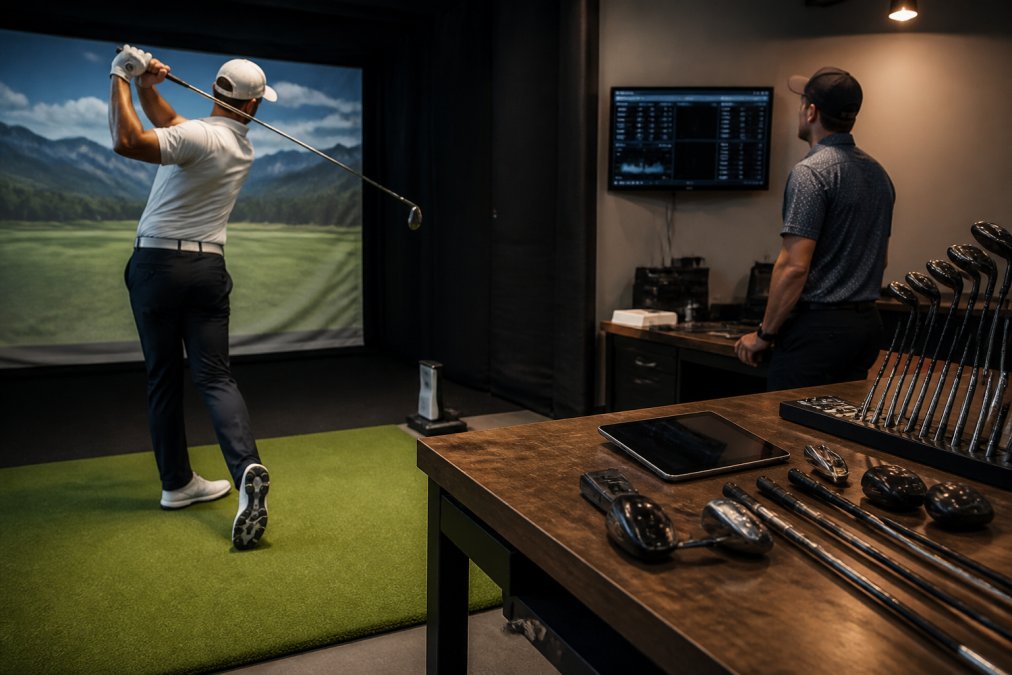
A proper fitting is a measurement exercise first and a sales conversation second. The fitter watches ball flight, captures club head speed and launch angle, and adjusts variables one at a time until your dispersion pattern tightens.
The Key Measurements and Data Points
Every fitting session revolves around a fixed set of variables. Understanding them before you walk in keeps you from nodding along to jargon you don't recognize.
- Club head speed and ball speed, which set your baseline distance potential
- Launch angle and spin rate, which determine carry distance and how the ball behaves on landing
- Lie angle, the angle between the shaft and the sole at impact, which controls start direction
- Shaft flex and shaft profile, matched to tempo rather than raw speed alone
- Grip size and swing weight, which affect how freely you release the club
- Smash factor, the ratio of ball speed to club head speed, which measures strike quality
A launch monitor tracks these in real time. Portable units like the Garmin Approach R10 record club head speed, ball speed, spin, launch angle, launch direction, and smash factor, and display shots on a dispersion chart with video overlay. That is the same feedback loop a fitter uses, which means you can rehearse the process at home before paying for a session.

How Much Does Golf Club Fitting Cost?
Golf club fitting cost varies widely by format, from a free retail session bundled with a purchase to a full multi-hour fitting with a specialist. Most players encounter three tiers, and the price gap between them is larger than most people expect.
Static fitting. A basic static fitting uses height and wrist-to-floor measurements to set a starting point for length and lie angle. Many big-box retailers offer this free with any purchase, and standalone static sessions typically run in the range of a modest retail purchase. It is the least precise option because it never watches the ball fly.
Dynamic fitting. A dynamic fitting adds a launch monitor and real ball flight. Expect a single-club session (usually driver or irons) to land in the low-to-mid hundreds of dollars, and a full-bag dynamic fitting to run several hundred. This is the tier where the data actually justifies the spend.

Tour-level or specialty fitting. Multi-hour sessions with a master fitter, exotic shaft matrixes, and outdoor Trackman data sit at the top of the range. These are built for low-handicap and competitive players, and the fee alone can exceed the cost of a new driver.
The variable nobody warns you about is whether the fitting fee is credited toward a purchase. Many retailers apply the fee to your order if you buy through them, which effectively makes the session free. Ask that question before you book, not after. A fitting that costs a couple hundred dollars and is fully credited against a set you were going to buy anyway is a very different proposition than one that is not.
Where the money genuinely goes is the equipment itself. A fitted driver or iron set costs more than an off-the-rack equivalent because of the shaft upgrade and the labor involved. Aftermarket shafts alone can add hundreds of dollars per club, and that is before the head, grip, and build labor.
One more cost lever: ask whether the fitter charges separately for the build or rolls labor into the club price. Some shops quote a low fitting fee and make it back on assembly, while others charge a higher fee and sell components closer to cost. Comparing the all-in number, not the headline fee, is the only fair way to shop.
Garmin Approach R10 - Wireless Golf →
Is Club Fitting Worth It for High Handicappers?
Yes, and the case is stronger for high handicappers than for low ones. A player shooting in the 90s or higher typically loses more strokes to poor strike location and inconsistent face angle than to any lack of talent, and both are equipment-sensitive. A lie angle that is two degrees off can push your start line consistently right or left, which a golfer then compensates for with a swing change that makes everything worse.
The Psychological and Physical Benefits of Fitted Clubs
Confidence is the most underrated output of a fitting session, and it is measurable in behavior if not in strokes. A golfer who trusts the club in their hands commits to the shot instead of steering it, and commitment is what produces a full release through impact. That psychological shift shows up as fewer tentative swings on the first tee.
How to Prepare for a Golf Club Fitting Session
Preparation determines how much useful data a fitter can collect in the time you have paid for. Arrive warm, bring your current clubs, and wear the shoes you actually play in, since sole geometry and posture both depend on them.
- Bring your gamer clubs so the fitter has a baseline to compare against
- Wear golf shoes and a glove, not sneakers and bare hands
- Warm up for ten to fifteen minutes before the session starts
- Know your typical miss and your average carry distance per club
- Bring a notebook or phone to record the specs the fitter recommends
- State your budget up front so recommendations stay realistic
A Readiness Assessment Before You Book
You are ready if:
- Your typical miss goes in one direction (a slice, or a pull) rather than scattering both ways
- You can hit ten balls in a row and roughly predict where most of them land
- Your club head speed is repeatable within a few miles per hour from swing to swing
- You have played enough rounds to know your real carry distances, not your best-ever distances
- Your swing is not mid-rebuild
You are not ready yet if:
- Your shots alternate between a hook and a slice with no pattern
- You are actively taking lessons and changing your swing plane or grip
- You cannot make solid contact often enough to trust the ball flight data
- You are shopping purely on price and would resent a recommendation that costs more
One last piece of preparation that pays off: decide in advance what you are willing to change. Some players walk in expecting new irons and walk out being told their current set is fine and only the lie angles need bending. Knowing your budget and your openness to a non-purchase outcome keeps the session honest and keeps you from being talked into clubs you did not need.
The Diminishing Returns Threshold: When Fitting Stops Helping
There is a point where additional fitting stops producing measurable gains, and knowing where it sits saves real money. The threshold arrives when your swing is inconsistent enough that the data spread between shots is wider than the difference between two club configurations. If your club head speed varies by more than a few miles per hour from swing to swing, the fitter cannot isolate the effect of a shaft change.
| Stage of Your Game | What Fitting Helps Most | What to Skip |
|---|---|---|
| New player, high handicap | Lie angle, grip size, shaft flex | Full-bag fine tuning |
| Improving, mid handicap | Shaft profile, loft adjustment, swing weight | Exotic shaft upgrades |
| Consistent, low handicap | Spin rate, launch window, shot shaping | Nothing, gains are real |
| Physical limitation or injury | Length, weight, grip diameter | Stiff, heavy shaft profiles |
Frequently Asked Questions
What actually happens during a professional golf club fitting?
A fitter uses a launch monitor to track club head speed, ball speed, spin rate, and launch angle. You hit shots with different shafts, lie angles, and club heads. The fitter analyzes your dispersion pattern and smash factor to recommend the best combination. You might try five to ten different setups before finding the right one. The goal is to match the equipment to your swing mechanics, not change your swing.
Do I need to be a low-handicap golfer to benefit from custom fitting?
No. High handicappers often see the biggest gains because off-the-rack clubs can exaggerate a slice or reduce carry distance. A proper fit can improve lie angle, shaft flex, and grip size, which helps with consistency. If you shoot above 100, a basic fitting for length and lie can still make the game more enjoyable and reduce mishits.
Can custom fitting help fix a slice or hook?
Fitting can reduce the severity of a slice or hook, but it will not eliminate a swing path issue. Adjusting lie angle and shaft profile can help square the face at impact. However, if your swing path is severely out-to-in, you still need lessons. Think of fitting as a tool to minimize your miss, not a cure for a flawed swing.
How often should you get your golf clubs fitted?
Get refitted every two to three years, or whenever your swing changes significantly. If you take lessons and your club head speed increases, your shaft flex may no longer match. Also, if you notice your ball flight has changed or you feel discomfort in your hands or wrists, it is time for a check. Post-fitting maintenance, like checking loft and lie annually, keeps your clubs performing.